

 July 26, 2026
 Print
Print

Run your hand across a tapestry and you can usually tell right away whether it’s a cheap print or something woven with care. But what actually goes into one? The material behind a tapestry affects everything from how it drapes on the wall to how long it lasts. Here’s a breakdown of what tapestries are really made of.

The Two Threads Behind Every Tapestry
Every woven tapestry is built from two components: the warp, the strong vertical threads stretched under tension on the loom, and the weft, the yarn woven horizontally to create color and pattern. The warp is almost always a strong, tightly spun cotton or linen thread — it needs to hold tension without stretching, even though it’s rarely visible in the finished piece.
The weft is where the real variety comes in, since it’s the yarn that determines the look, feel, and durability of the finished tapestry.
Traditional Fibers
Historically, tapestries were woven almost entirely from natural fibers:
- Wool — the classic choice for centuries, prized for holding dye well and its natural durability
- Silk — used to add sheen and fine detail in high-end or royal commissions
- Linen — often used for the warp thread thanks to its strength and resistance to stretching
- Cotton — a softer, more affordable alternative that became common as weaving spread beyond royal workshops
Materials Used in Modern Tapestries
Today’s tapestries — including the ones we make — are typically woven or printed on a few common fabrics:
- Cotton — breathable, soft, and easy to care for, still one of the most popular choices
- Polyester and cotton-poly blends — more resistant to fading and wrinkling, and often used for vividly printed designs
- Chenille — a plush, textured yarn used to add depth and a slightly raised feel to woven designs
- Microfiber — extremely lightweight and soft, common in decorative wall tapestries meant to drape loosely
Wool vs. Cotton vs. Synthetic Blends
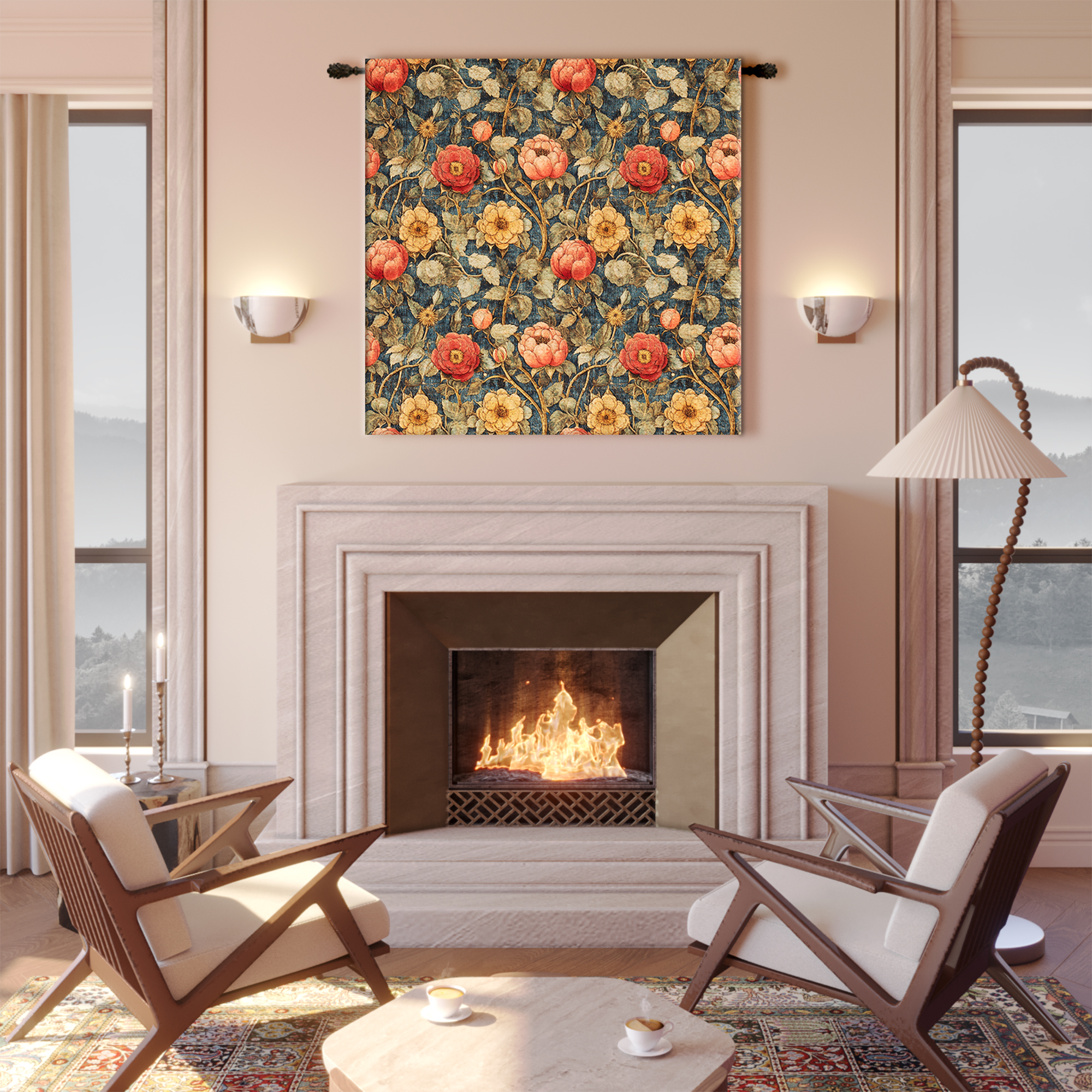
Each material comes with its own trade-offs. Wool holds up remarkably well over time and takes dye beautifully, but it’s heavier and can be more expensive. Cotton is breathable, easy to wash, and budget-friendly, though it can fade a bit faster under direct sunlight. Synthetic blends split the difference — they’re generally the most colorfast and low-maintenance option, which is why they’ve become the standard for printed decorative tapestries.
If you’re choosing a tapestry for a sunny room, a synthetic or cotton-poly blend will typically hold its color longer than a natural fiber piece left in direct light.

What About the Hanging Rod and Backing?
Beyond the fabric itself, most ready-made tapestries include a few extra material details that make them easier to hang: a stitched rod pocket along the top edge for a slim wooden or metal dowel, and finished or hemmed edges to keep the fabric from fraying over time. Some larger or heavier tapestries also include reinforced corners or grommets for extra support.
How Material Affects Look and Feel
The fiber content doesn’t just affect durability — it changes how the piece actually looks on your wall. Thicker, textured materials like wool or chenille create visible depth and shadow in the weave, giving a more rustic, handmade look. Lighter materials like cotton or microfiber drape more loosely and softly, which tends to suit modern, minimalist spaces better than heavier, structured fabrics.
Final Thoughts
There’s no single “correct” material for a tapestry — it comes down to the balance of texture, durability, and care you want. Natural fibers bring warmth and history, while modern blends bring vibrant color and easy upkeep. Either way, knowing what’s in the weave helps you pick a piece that will actually hold up in your space.
Curious what our tapestries are made from? Browse the collection and check each product’s details for material specifics.